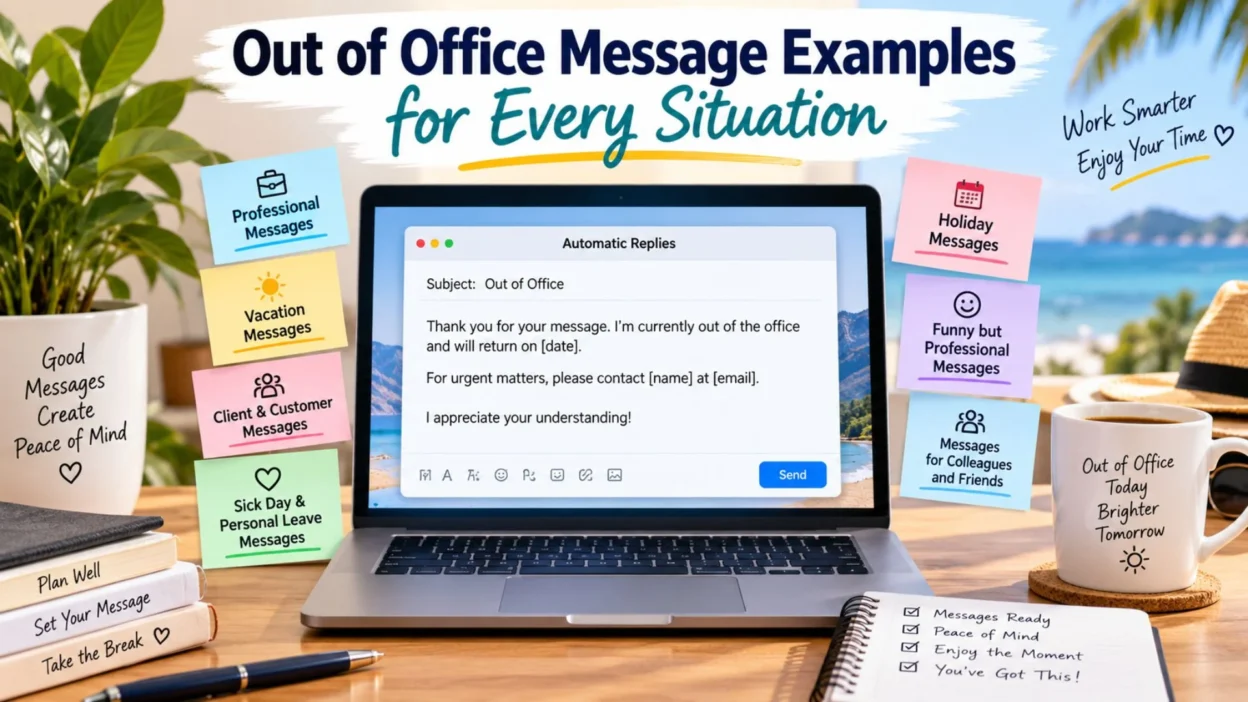
You finally have time away from work, but there is one small thing standing between you and actually switching off: your inbox. An effective out-of-office reply can handle that problem before you close your laptop.
The best out of office message examples do more than say, “I’m away.” They tell people when you will return, whether they should expect a response, and who they can contact if something needs immediate attention. At the same time, your message does not have to sound stiff or overly formal.
Maybe you need a polished reply for a two-week vacation, a simple note for a personal day, or something warmer for coworkers who already know you well. You might even want a lighthearted message that makes people smile without looking unprofessional.
Below, you’ll find practical templates for different situations, industries, and communication styles. Pick one that fits, change the details, and make it yours.
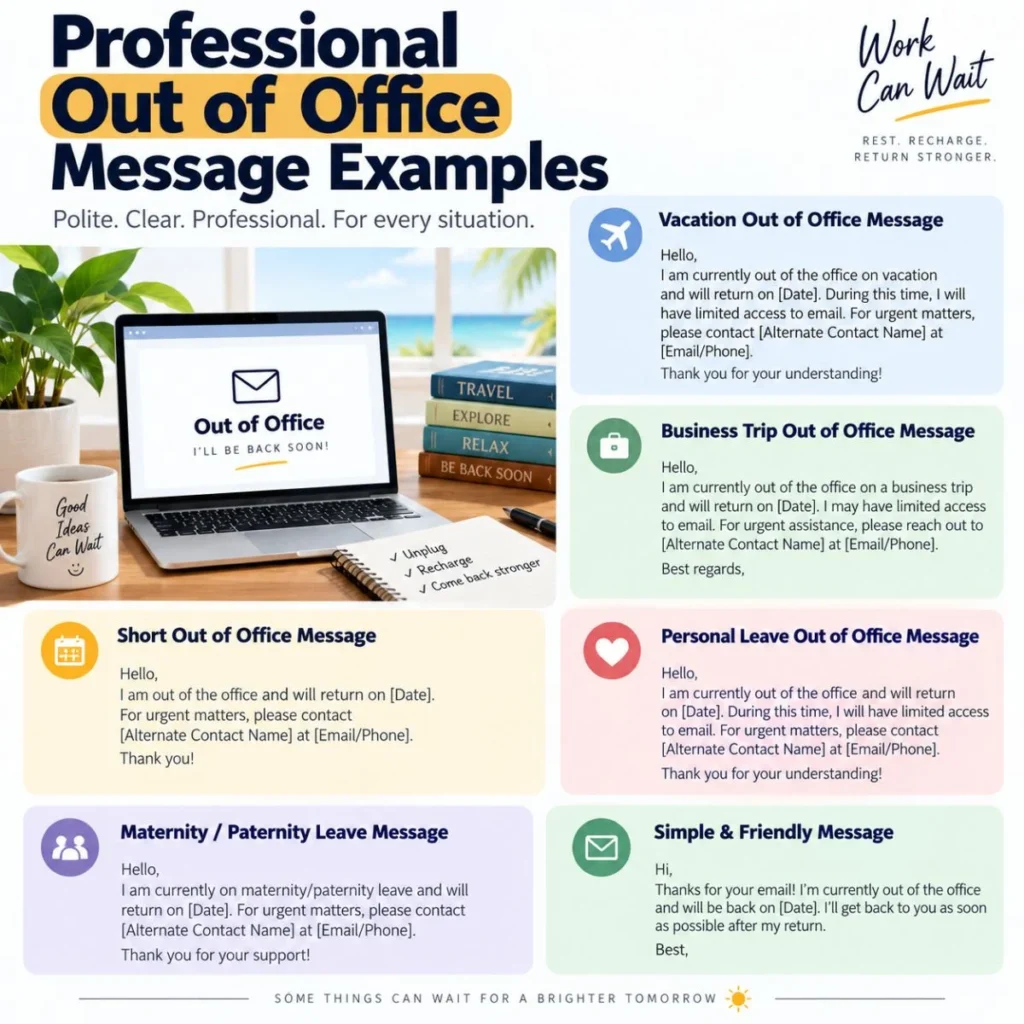
A professional automatic reply should be clear, courteous, and useful. It does not need a long explanation about why you are away. In most cases, the reader simply needs to know your availability, expected return date, and an alternative contact when appropriate.
These examples work well for clients, managers, vendors, coworkers, and other professional contacts.
- Thank you for your message. I’m currently out of the office and will return on [date]. I’ll respond as soon as possible after I’m back.
- Thank you for reaching out. I’m away from the office through [date] and will have limited access to email. For urgent matters, please contact [name] at [email].
- I’m currently out of the office and unavailable until [date]. I appreciate your patience and will respond when I return.
- Thanks for your email. I’m away from work and expect to return on [date]. I’ll review your message as soon as I’m back.
- I’m currently unavailable and will return on [date]. If your request cannot wait, please contact [name] at [email].
- Thank you for contacting me. I’m out of the office until [date] and may not be able to respond during this time. I’ll get back to you after my return.
- I’m away from the office from [start date] through [end date]. For immediate assistance, please reach out to [contact]. Otherwise, I’ll respond upon my return.
- Thanks for your message. I’m currently away and will be back on [date]. Your email is important to me, and I’ll respond as soon as I can after returning.
- I’m out of the office with limited email access until [date]. For urgent requests, please contact [name/team]. Thank you for understanding.
- Thank you for your email. I’m unavailable until [date] and will respond to your message once I return to the office.
- I’m currently away from my desk and will return on [date]. If you need assistance before then, please contact [name] at [contact information].
- I appreciate your message. I’m out of the office and will be returning on [date]. I’ll follow up with you as soon as possible.
- Thank you for reaching out. I’m unavailable during [dates] and will have limited access to email. Please contact [name] for time-sensitive matters.
- I’m away from the office until [date]. I’ll have limited availability during this period and will respond to outstanding messages after I return.
- Thanks for getting in touch. I’m currently out of the office and will return on [date]. I appreciate your patience in the meantime.
Short Out of Office Messages
Sometimes the simplest reply is the best one. If your workplace does not require detailed information, a short automatic response can communicate everything necessary without taking up space.
These options are especially useful when you want your autoresponder to be quick, clean, and easy to understand.
- I’m currently out of the office and will return on [date]. I’ll respond when I’m back.
- Out of the office until [date]. Thanks for your patience!
- Thanks for your email. I’m away until [date] and will reply after I return.
- I’m currently unavailable and will be back on [date].
- Away from the office through [date]. I’ll get back to you when I return.
- I’m out of office today and will respond when I’m back.
- Thanks for reaching out. I’m away from email until [date].
- I’m taking some time away and will return on [date]. I’ll respond then.
- Currently out of the office. Back on [date].
- I’m unavailable until [date]. Thank you for understanding.
- Away until [date]. I’ll catch up with your message when I return.
- I’m out of the office with limited email access until [date].
- Thanks for your message. I’ll be back on [date] and will respond as soon as possible.
- I’m away from my inbox until [date]. I’ll reply when I’m back.
- Out of office today. I’ll respond on my return.
Friendly and Warm
Not every workplace communication needs to sound formal. If you work with a familiar team or have long-standing relationships with clients, a warmer tone can feel more natural.
The key is to remain helpful while allowing some personality to come through.
- Thanks for your message! I’m taking a little time away and will be back on [date]. I’ll get back to you then.
- I’m currently away from my inbox, hopefully enjoying a much-needed break. I’ll be back on [date] and will respond as soon as I can.
- Thanks for reaching out! I’m out of the office until [date]. I’ll catch up with your message when I’m back.
- I’m taking some time offline and will return on [date]. Thanks for your patience while I recharge.
- I’m away for a few days and will be back on [date]. Looking forward to catching up when I return!
- Thanks for your email. I’m stepping away from work for a bit and will respond after I’m back on [date].
- I’m currently enjoying some time away from the office. I’ll return on [date] and will get back to you then.
- I’m away from email for now, but your message is safely in my inbox. I’ll take care of it when I return on [date].
- Thanks for stopping by my inbox! I’m away until [date] and will reconnect with you when I’m back.
- I’m taking a short break from work and will be back on [date]. Thanks for understanding!
- I’m offline for a little while and will return on [date]. I hope you’re having a great day, too.
- Thanks for getting in touch. I’m away until [date], but I’ll be happy to connect once I’m back.
- I’m currently out of the office and giving my inbox a little vacation, too. I’ll return on [date].
- I’m taking some well-earned time away and will be back on [date]. Thanks for your patience!
- I’m away from work for now and will catch up with messages when I return. See you in the inbox on [date].
Vacation replies should set expectations clearly. If you genuinely plan to disconnect, avoid saying you will “check email occasionally” unless you actually intend to do so.
A good vacation autoresponder can also direct urgent requests to someone who is available, so people know what to do instead of waiting unnecessarily.
- I’m currently on vacation and will return on [date]. I’ll respond to your email as soon as possible after I’m back.
- Thanks for your message. I’m away enjoying some vacation time through [date]. For urgent matters, please contact [name] at [email].
- I’m out of the office on vacation until [date] and will have limited access to email. I’ll get back to you when I return.
- I’m taking a break from work and will be back on [date]. If you need immediate assistance, please contact [team/name].
- I’m away on vacation from [start date] through [end date]. I’ll respond to messages after I return.
- Thanks for reaching out. I’m currently away on vacation and will be back on [date]. I appreciate your patience.
- I’m stepping away for some vacation time and will return on [date]. I won’t be regularly monitoring email during my absence.
- I’m currently enjoying some time away and will reconnect with my inbox on [date]. For anything urgent, please contact [name].
- I’m out of the office for vacation and will return on [date]. I’ll respond as soon as I’m able after my return.
- My inbox and I are taking a vacation at the same time. I’ll be back on [date] and will catch up then.
- I’m away on vacation until [date], so responses may take longer than usual. Thanks for understanding!
- I’m taking a few days away from work and will return on [date]. I’ll follow up with you once I’m back.
- I’m currently away enjoying some personal time. I’ll return on [date] and respond to your message then.
- I’m on vacation and away from email until [date]. For immediate help, please contact [name/team].
- I’m taking a proper break from the inbox and will be back on [date]. Thanks for your patience while I’m away.
Holiday messages can be professional while still reflecting the spirit of the occasion. If your company observes a specific holiday, mention it only when it is useful to the people receiving your reply.
For international teams, a neutral “holiday break” message can sometimes be more appropriate.
- Thanks for your message. I’m out of the office for the holiday and will return on [date].
- I’m away for the holiday break and will be back on [date]. I’ll respond to your email after I return.
- Our office is closed for the holiday, and I’ll return on [date]. Thank you for your patience.
- I’m currently away enjoying the holiday and will have limited access to email until [date].
- Thanks for reaching out! I’m taking a holiday break and will be back on [date]. Wishing you a wonderful holiday as well.
- I’m out of the office for the holiday period and will respond when I return on [date].
- I’m taking some time away for the holidays and will reconnect with email after [date].
- Happy holidays! I’m currently away from the office and will return on [date]. I’ll respond as soon as possible after I’m back.
- I’m away for the holiday break. If your request is urgent, please contact [name]; otherwise, I’ll get back to you after [date].
- Thanks for your email. I’m offline for the holiday and will return on [date]. Have a great holiday season!
- I’m currently out of the office celebrating the holiday and will be back on [date]. I’ll catch up with messages then.
- I’m taking a holiday pause and will return to the office on [date]. Thank you for understanding.
- My inbox is taking a holiday break with me. I’ll be back and responding from [date].
- I’m away from work for the holiday and will have limited email access. I’ll reply when I return on [date].
- Wishing you a wonderful holiday! I’m currently out of the office and will return on [date].
Funny Out of Office Messages
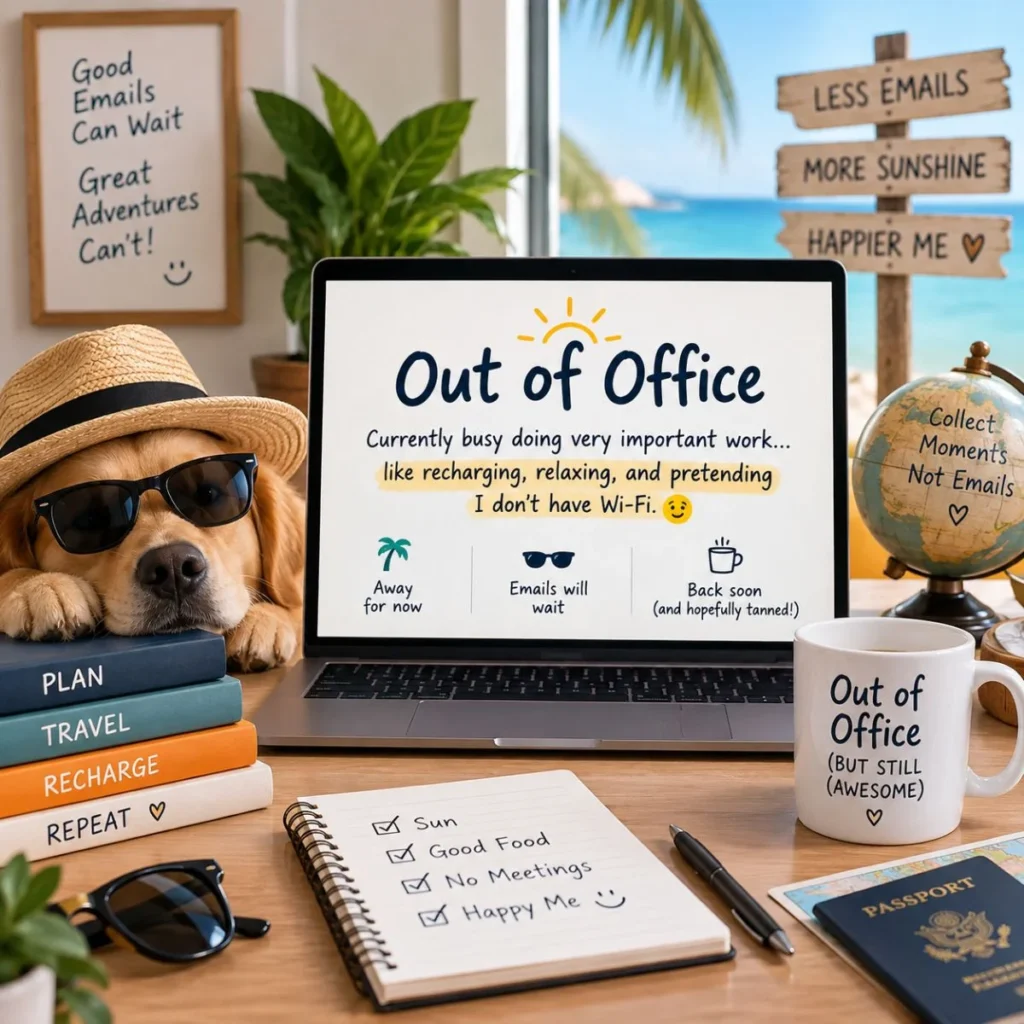
A little humor can make an automatic reply more memorable, especially for internal teams. However, funny does not mean careless. Avoid jokes that could confuse clients, sound dismissive, or make it unclear when you will return.
- I’m currently out of the office and giving my inbox a chance to miss me. I’ll be back on [date].
- I’ve temporarily traded my keyboard for some much-needed time away. I’ll return on [date].
- I’m away from the office and attempting not to check email. Wish me luck. I’ll be back on [date].
- My inbox and I are currently taking some personal space. We’ll reunite on [date].
- I’m out of the office until [date]. The emails will still be here when I return, apparently.
- I’ve stepped away from the inbox for a while. Future me will handle this on [date].
- I’m currently unavailable because I’m doing something revolutionary: not working. I’ll return on [date].
- I’m away until [date], at which point I’ll bravely face the inbox waiting for me.
- I’m out of office and temporarily pretending email does not exist. I’ll be back on [date].
- I’m taking a break from work and letting my inbox enjoy some uninterrupted attention from absolutely no one.
- I’m away from my desk until [date]. If it can wait, future me thanks you.
- I’ve escaped the office temporarily and will return on [date]. Please leave the inbox exactly where you found it.
- I’m currently out of office, recharging my batteries instead of my laptop. Back on [date].
- I’m away until [date]. My email is collecting messages while I collect memories.
- I’m taking some time off and will return on [date]. Until then, this automated message is doing my job.
When you are away because of illness or a personal matter, you generally do not need to provide private details. A simple statement about your availability is enough.
If you expect to return on a specific date, include it. If you are unsure, use wording that does not promise a return time you cannot guarantee.
- I’m currently out of the office and unavailable today. I’ll respond when I’m able to return.
- Thank you for your message. I’m away from work today and will follow up as soon as possible.
- I’m currently unavailable due to personal leave and expect to return on [date]. I’ll respond after I’m back.
- I’m out of the office today and will have limited access to email. For urgent matters, please contact [name].
- Thanks for reaching out. I’m away from the office and expect to return on [date]. I appreciate your understanding.
- I’m currently taking some time away from work and will respond to messages when I return.
- I’m unavailable through [date] and will have limited access to email during this time. Thank you for your patience.
- I’m away from work today and will catch up on messages once I’m back.
- I’m currently out of the office for personal reasons. I’ll respond as soon as I’m available again.
- Thank you for your patience. I’m away from email until [date] and will reply after I return.
- I’m taking a brief leave from work and will return on [date]. For urgent needs, please contact [name/team].
- I’m currently unavailable and unable to respond to email. I’ll follow up when I’m back.
- I’m away from the office for the time being and will respond when I’m able to return.
- Thank you for your understanding. I’m currently on leave and expect to resume email responses on [date].
- I’m away today and may be slower than usual to respond. I’ll get back to you as soon as I can.
Messages sent to customers or clients should be especially clear. Someone outside your organization may not know your internal structure, so an alternative contact can be valuable.
Keep the language welcoming and avoid internal jokes unless you have a very informal relationship with the recipient.
- Thank you for contacting me. I’m currently out of the office and will return on [date]. For immediate assistance, please contact [name] at [email].
- I appreciate you reaching out. I’m unavailable until [date]. If your request requires immediate attention, please contact [team/contact].
- Thank you for your email. I’m away from the office through [date] and will respond as soon as possible after my return.
- I’m currently unavailable and have limited access to email. For assistance while I’m away, please contact [name] at [email or phone].
- Thank you for getting in touch. I’m out of the office until [date]. Your message has been received, and I’ll follow up when I return.
- I’m currently away from the office and will return on [date]. If you need assistance before then, [name/team] will be happy to help.
- Thank you for your patience. I’m away through [date] and will review your message upon my return.
- I’m unavailable from [start date] through [end date]. For urgent customer requests, please contact [support team/contact].
- Thanks for reaching out. I’m currently away and will have limited access to email until [date]. I’ll respond after I return.
- I’m out of the office until [date]. If your matter is time-sensitive, please contact [name] at [email]. Otherwise, I’ll be in touch after my return.
- Your message has been received. I’m currently away from the office and expect to respond after [date].
- Thank you for contacting our team. I’m unavailable until [date]. Please reach out to [team/contact] for immediate assistance.
- I’m currently out of office and will return on [date]. I appreciate your understanding and look forward to connecting when I’m back.
- Thanks for your message. I’m away until [date], but [name/team] can assist with urgent requests in the meantime.
- I’m taking some time away from the office and will return on [date]. Thank you for your patience while I’m unavailable.
How to Write an Effective Out of Office Reply
An automatic response does not need to tell your whole story. Its job is to answer the practical questions a sender is likely to have.
A useful out-of-office message usually includes these elements:
1. Say that you are unavailable. Start clearly. “I’m currently out of the office” immediately tells the reader why they have not received a normal response.
2. Give a return date when possible. A specific date is more useful than “I’ll be back soon.” It helps people decide whether they should wait or find another person.
3. Explain your email availability. If you will not check email at all, say so. If you expect limited access, mention that instead.
4. Provide an alternative contact when necessary. For urgent matters, direct the sender to a colleague, department, support address, or another appropriate resource.
5. Set realistic expectations. Do not promise an immediate response after returning if you know you will have a crowded inbox. “I’ll respond as soon as possible” gives you more flexibility.
6. Keep private information private. You do not need to explain medical circumstances, family situations, travel plans, or personal details. “I’m on personal leave” can be enough.
A strong automatic reply is usually short because the person reading it wants an answer, not an essay.
How to Personalize an Out of Office Message
Copy-and-paste templates are useful, but a few small changes can make an autoresponder sound much more like you.
Start by replacing every placeholder with accurate information. Add your actual return date, alternative contact, and relevant team details. Then consider who will receive the message.
For example, an internal team might appreciate:
“I’m away until Friday and will catch up with everything when I’m back.”
A client may need:
“For urgent project matters, please contact Alex at [email].”
The difference is not just tone. It is about giving each audience the information they actually need.
You can also personalize the opening and closing. “Thanks for reaching out” feels warmer than a completely formal statement, while “Thank you for your patience” may be more appropriate for external contacts.
Most importantly, read the message as if you were the sender. After seeing it, would you know whether to wait, contact someone else, or try again later? If the answer is yes, your out-of-office reply is doing its job.
What to Avoid in an Out of Office Message
A good autoresponder is helpful partly because it avoids unnecessary information.
Try not to include an exact travel itinerary, personal phone number, hotel details, or other information that recipients do not need. You also do not need to apologize repeatedly for being away. Time off is a normal part of working life.
Avoid vague statements such as “I’ll respond soon” when you know you will be gone for several days. Avoid saying that you are checking email if you plan to completely disconnect.
Humor deserves some judgment, too. A joke that works beautifully with your coworkers may feel inappropriate to a prospective client. When in doubt, keep the message friendly but professional.
Finally, make sure your dates are correct. An outdated return date can create more confusion than having no automatic reply at all.
Quick Guide to Choosing the Right Tone
The right style depends largely on who will receive your message.
For clients: Keep it polished, helpful, and direct. Include an alternative contact when appropriate.
The best message is not necessarily the most creative one. It is the one that gives the recipient enough information to take the right next step.
Frequently Asked Questions About Out of Office Messages
What should I include in an out of office message?
At minimum, mention that you are unavailable and, when possible, provide your expected return date. If someone else can help while you are away, include their contact information. You can also mention whether you will have limited access to email.
How long should an out of office message be?
Usually, a few sentences are enough. The goal is to communicate your availability and provide useful next steps. A longer message is appropriate only when the sender genuinely needs additional information.
Should I say why I am out of the office?
No. You can mention “vacation,” “holiday,” or “personal leave” if you want, but you are not required to explain private circumstances. Your availability is generally more important than the reason for your absence.
Should I include my return date?
Yes, if you know it. A specific return date helps the sender understand when they can reasonably expect a response. If your return date is uncertain, use wording that does not create a false expectation.
Should an out of office message include an alternative contact?
If urgent requests need attention while you are away, absolutely. Include the appropriate colleague, department, customer-service team, or shared inbox. If nothing needs immediate coverage, an alternative contact may not be necessary.
Can an out of office message be funny?
Yes, particularly for internal communication or informal teams. Keep the humor understandable and make sure the message still clearly communicates when you will return and how urgent matters should be handled.
Conclusion
A good automatic reply should make your absence easier for everyone—not create another communication problem. The strongest out of office message examples are simple, honest, and tailored to the people who will actually read them.
And if your workplace culture allows it, a little humor can make an otherwise routine notification feel human.
Before activating your reply, check your dates, confirm any alternative contact information, and make sure your wording accurately reflects how available you will be. Then close the inbox without worrying about whether people know what to expect.
Sometimes the most professional thing you can put in an email is simply: I’m away, I’ll be back on this date, and here’s what you should do if you need help before then.

Muhammad Sarfraz is a content creator and author at Message Ideas Daily, passionate about creating heartfelt, practical, and meaningful message ideas that help people express their feelings and connect with others.