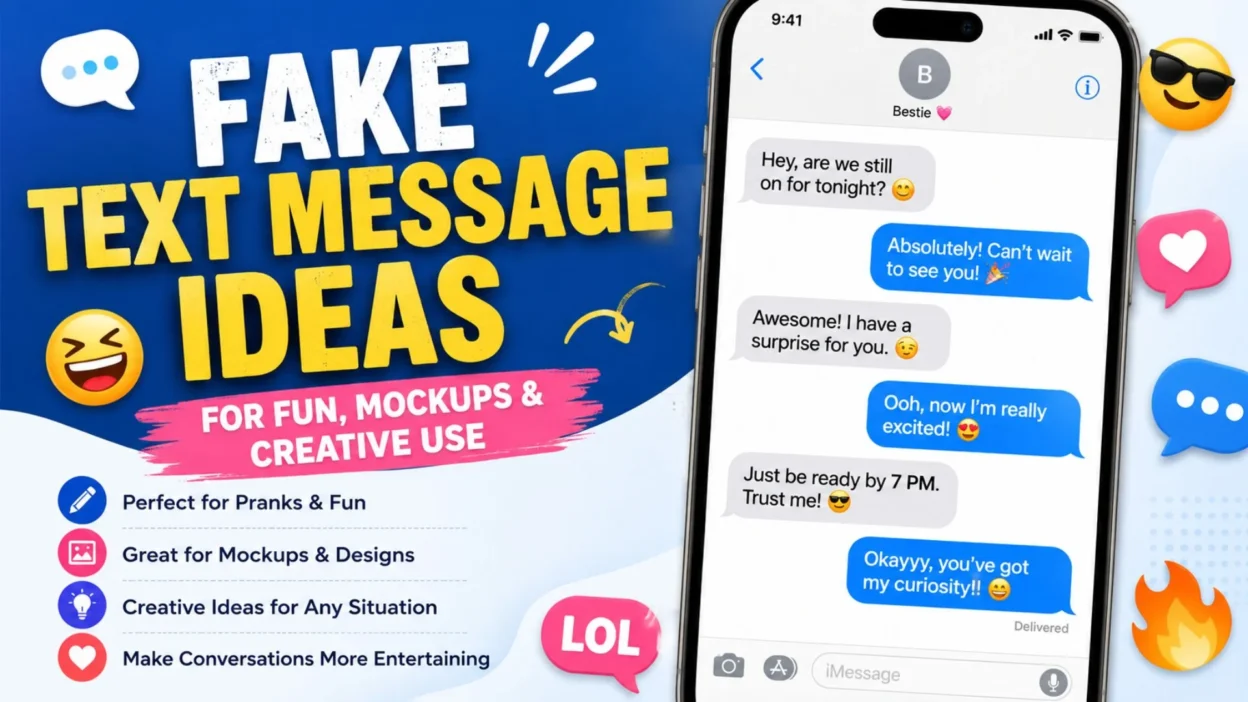
Sometimes you need a text conversation that looks natural without actually involving another person. Maybe you’re creating a social media graphic, writing a fictional scene, designing an app, making a meme, or setting up a harmless joke with friends. A well-written fake text message can make that idea feel much more believable and entertaining.
The key is keeping the conversation clearly fictional when there is any chance someone could mistake it for a real exchange. Fake conversations work best as creative props—not as fabricated proof, impersonation, or a way to mislead someone.
Below, you’ll find realistic examples for different situations, including funny chats, friendship conversations, romantic fiction, workplace mockups, family exchanges, social-media content, and short screenshot-ready ideas. You can copy the structure, change the names, and adjust the wording to fit your project.
Short Fake Text Message Examples
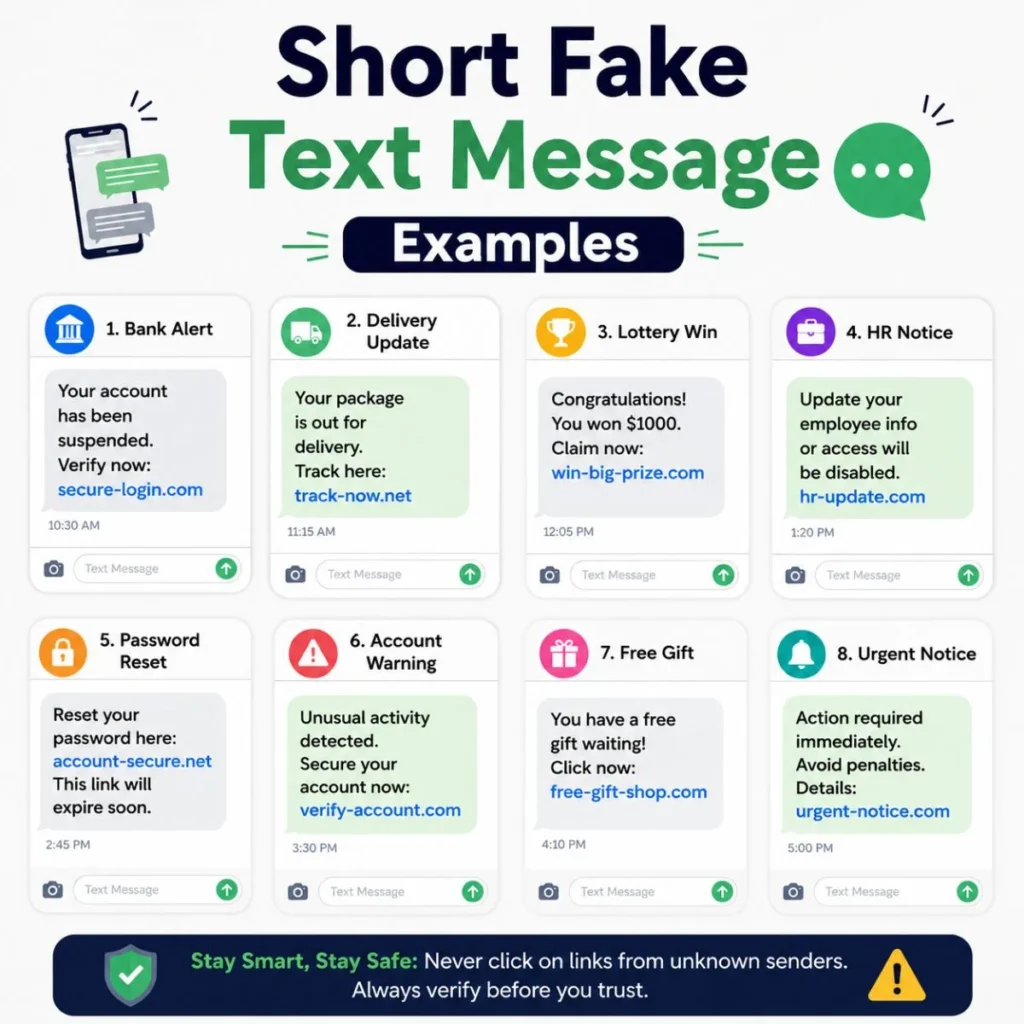
Short conversations are especially useful for memes, mockups, thumbnails, story ideas, and social posts. They do not need long explanations. A few natural lines can establish the entire situation.
- A: “Are you coming?” B: “I was. Then I remembered I hate leaving my house.”
- A: “Did you eat?” B: “Does coffee count as a food group?”
- A: “We need to talk.” B: “That sentence has never ended well.”
- A: “Guess what?” B: “You finally cleaned your room?”
- A: “I have good news.” B: “Okay, why do I suddenly feel nervous?”
- A: “Where are you?” B: “Five minutes away.” A: “You said that twenty minutes ago.”
- A: “Want to go out tonight?” B: “Define ‘go out.’”
- A: “I finished the project.” B: “You mean you started it?”
- A: “Do you remember what I told you?” B: “Absolutely.” A: “What did I say?” B: “That you told me something.”
- A: “Can you keep a secret?” B: “Not from my facial expressions.”
- A: “I’m outside.” B: “Outside where?” A: “That is an excellent question.”
- A: “Are you awake?” B: “Unfortunately.”
- A: “I need your advice.” B: “You have come to the wrong person.”
- A: “Be honest. Was my idea terrible?” B: “Do you want the honest answer or the friendship answer?”
- A: “I’m almost ready.” B: “How almost?” A: “Emotionally.”
Funny Fake Text Messages
Comedy usually works because the conversation feels spontaneous. Instead of making every line exaggerated, use ordinary situations and give one person an unexpected response.
- A: “Why did you send me a picture of a potato?” B: “It reminded me of you.” A: “That is either sweet or extremely insulting.”
- A: “I’m starting a healthy lifestyle tomorrow.” B: “What happened today?” A: “Today is outside the plan.”
- A: “Can you pick me up?” B: “Sure. Where are you?” A: “That part is still under investigation.”
- A: “I think I need a vacation.” B: “You just got back.” A: “Exactly. I need to recover from the vacation.”
- A: “I accidentally liked a photo from 2018.” B: “Congratulations. You are officially part of their history now.”
- A: “Did you buy snacks?” B: “Yes.” A: “Good. Did you buy enough?” B: “There is no such thing.”
- A: “I have a five-year plan.” B: “What’s in it?” A: “Mostly snacks and hoping things work out.”
- A: “I’m going to bed early tonight.” B: “What time?” A: “Eventually.”
- A: “Why is your alarm going off?” B: “It’s motivational.” A: “You’ve snoozed it six times.” B: “It’s working slowly.”
- A: “You said you were saving money.” B: “I am.” A: “Then why did you buy that?” B: “It was an investment in my happiness.”
- A: “Want to exercise?” B: “I already lifted my phone today.”
- A: “I made dinner.” B: “You cooked?” A: “I ordered it with confidence.”
- A: “What are you doing?” B: “Avoiding responsibilities.” A: “Professional or recreational?” B: “Professional.”
- A: “You were supposed to call me.” B: “I did.” A: “When?” B: “In my imagination.”
- A: “Are you busy?” B: “No.” A: “Can you help me move?” B: “Suddenly, yes.”
Fake Text Messages Between Friends
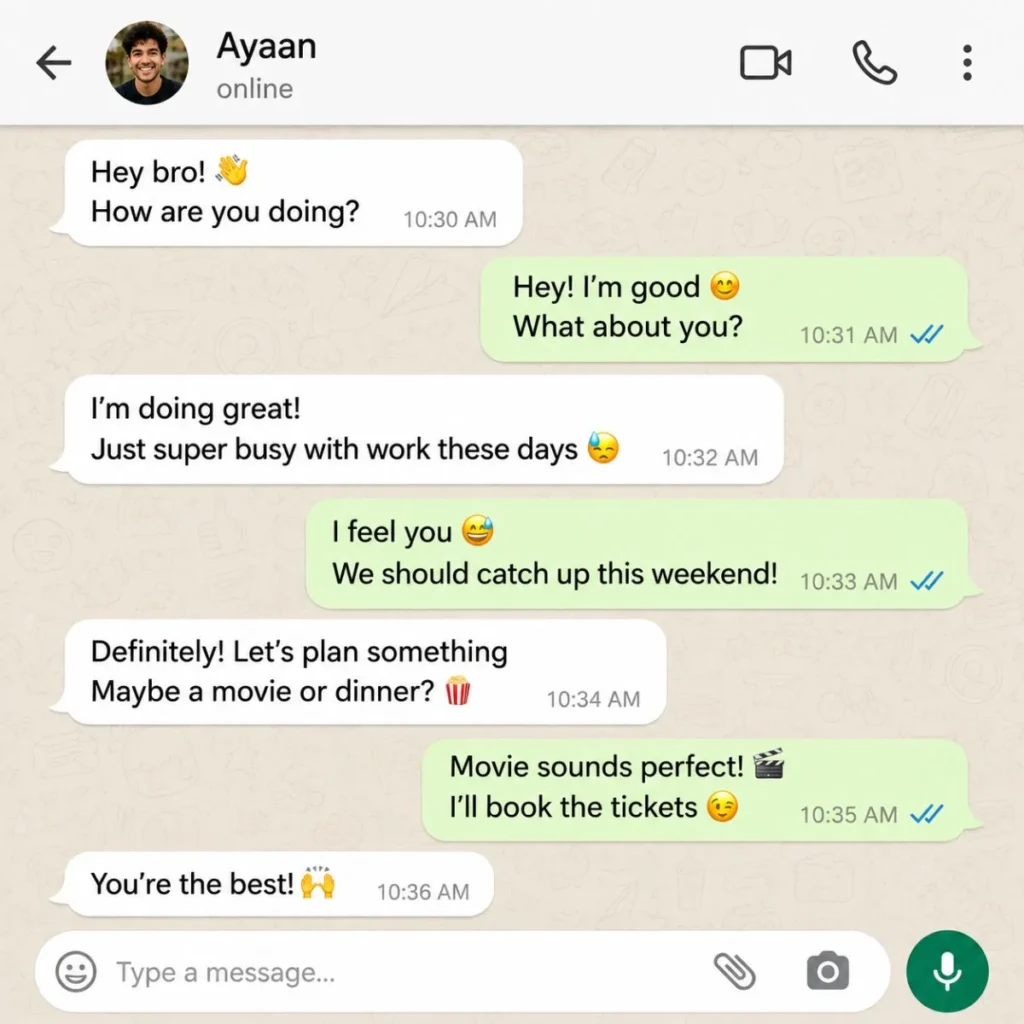
Friendship conversations are perfect for fictional screenshots because they naturally include teasing, inside jokes, casual plans, and everyday problems. These examples can work for stories, memes, friendship-themed posts, or design mockups.
- A: “Tell me you’re coming without telling me you’re coming.” B: “I already picked the restaurant.”
- A: “We should hang out more.” B: “Agreed. When?” A: “We’ll figure it out.” B: “So never.”
- A: “I need someone to talk to.” B: “I’m here. Start from the beginning.”
- A: “You won’t believe what happened.” B: “I believe almost anything when it comes from you.”
- A: “Movie tonight?” B: “Sure.” A: “You choose.” B: “Never mind. You choose.”
- A: “Thanks for always listening.” B: “Of course.” A: “Even when I repeat the same story?” B: “Especially then.”
- A: “Do you remember our first conversation?” B: “Unfortunately, yes.”
- A: “I have an idea.” B: “Should I be worried?” A: “Probably.”
- A: “I’m proud of you.” B: “That actually means a lot. Thank you.”
- A: “Promise you won’t judge me?” B: “I promise nothing.”
- A: “Emergency.” B: “What happened?” A: “I can’t decide what to order.”
- A: “We’re getting older.” B: “Speak for yourself.”
- A: “Same time next week?” B: “Absolutely. I’ll probably be late.”
- A: “You know I appreciate you, right?” B: “Yes, but I won’t stop you from saying it.”
- A: “No matter how chaotic things get, I’m glad you’re my friend.” B: “Same. Somehow we make the chaos fun.”
Romantic Fake Text Messages for Fictional Conversations
Romantic text conversations can be useful when writing a story, creating a fictional chat graphic, or developing characters. Keep the exchange natural rather than making every message sound like a dramatic love letter.
- A: “Made it home?” B: “Yes. Thanks for checking.”
- A: “I saw something today that reminded me of you.” B: “Was it cute?” A: “Obviously.”
- A: “I had a really good time tonight.” B: “Me too. I didn’t want the evening to end.”
- A: “You make ordinary days feel a little better.” B: “That’s one of the nicest things anyone has said to me.”
- A: “Good morning. Hope today is kind to you.” B: “It already is. I woke up to your message.”
- A: “Can I tell you something?” B: “Always.”
- A: “I smiled when I saw your name on my phone.” B: “Okay, that made me smile too.”
- A: “I wish you were here.” B: “Then let’s make a plan instead of wishing.”
- A: “How was your day?” B: “Better now that you’re asking.”
- A: “Sleep well.” B: “You too. Talk tomorrow?”
- A: “I don’t need a special occasion to tell you I appreciate you.” B: “And I don’t need one to appreciate you back.”
- A: “You have a way of making me laugh when I don’t feel like smiling.” B: “Then I guess I’ll keep trying.”
- A: “What’s your favorite thing about us?” B: “How easy it feels to be myself around you.”
- A: “I can’t wait to see you.” B: “Same. Counting down already.”
- A: “Just wanted to say I’m thinking about you.” B: “Message received. And returned.”
Family Fake Text Message Examples
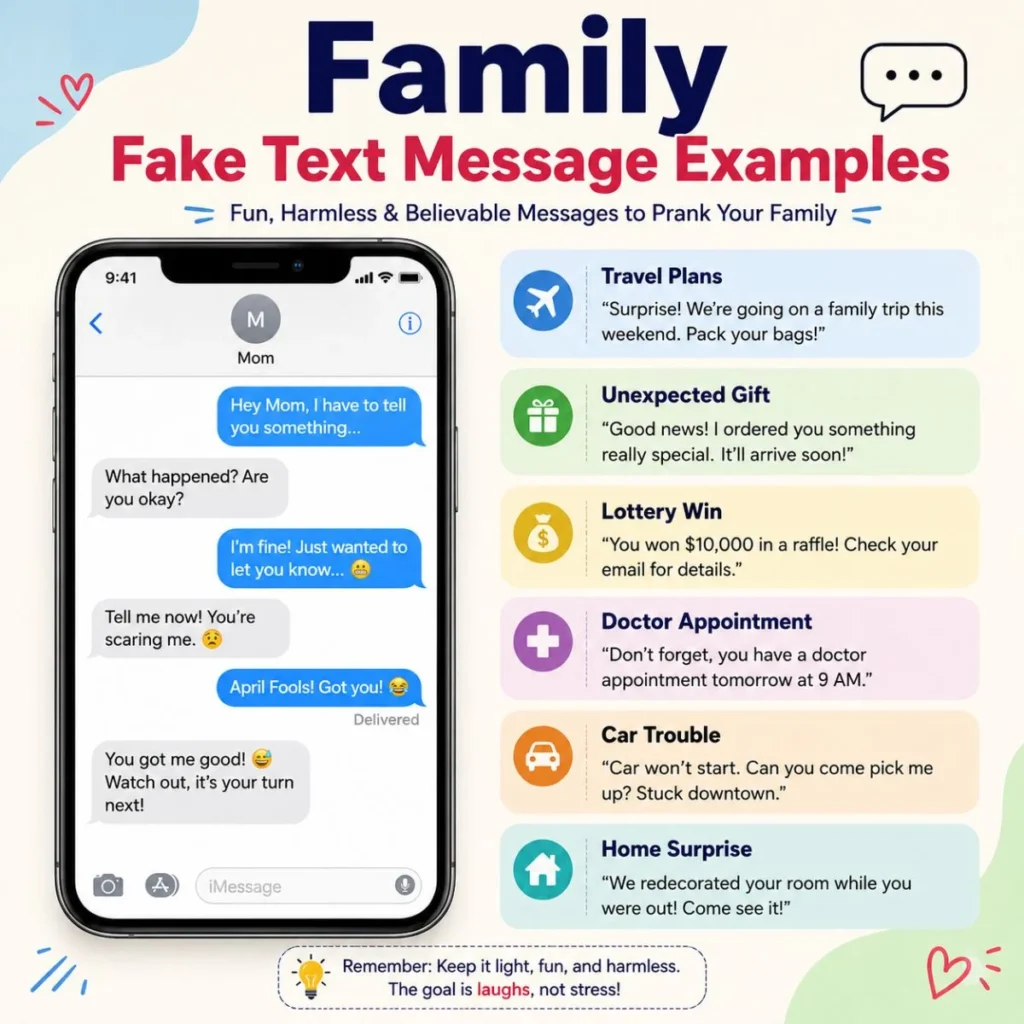
Family conversations often have a recognizable rhythm: practical questions, reminders, affection, and the occasional humorous misunderstanding. These can be useful for fictional scenes and relatable content.
- A: “Did you get home safely?” B: “Yes, I’m home. ❤️”
- A: “Don’t forget to call Grandma.” B: “I won’t. Thanks for reminding me.”
- A: “What time are you coming over?” B: “Around six.” A: “Come hungry.”
- A: “Did you eat?” B: “Yes.” A: “Real food?” B: “Define real.”
- A: “We’re all thinking about you.” B: “Love you all. I’ll visit soon.”
- A: “Take a jacket.” B: “It’s warm outside.” A: “Take the jacket.”
- A: “Can you pick up some milk?” B: “Sure.” A: “And bread.” B: “Anything else?” A: “Since you’re already there…”
- A: “Happy birthday! We’re so proud of you.” B: “Thank you. Love you!”
- A: “Call me when you have a minute.” B: “Everything okay?” A: “Yes. I just miss talking to you.”
- A: “You don’t need to bring anything.” B: “I’m bringing dessert anyway.” A: “Okay, you’re officially invited.”
- A: “How’s everything going?” B: “Busy, but okay.” A: “Remember we’re always here if you need us.”
- A: “Did you lock the door?” B: “Yes.” A: “Are you sure?” B: “Yes.” A: “Okay. Just checking.”
- A: “Proud of you.” B: “That means more than you know.”
- A: “Come home this weekend.” B: “I’ll try.” A: “That’s family code for ‘please come home.’”
- A: “Love you.” B: “Love you too. ❤️”
Fake Text Messages for Work and App Mockups
A fictional workplace conversation can help demonstrate a messaging interface, illustrate a presentation, or create a product prototype. For professional examples, avoid using real names, company logos, confidential information, or fabricated conversations that could be mistaken for genuine workplace records.
- Manager: “Do you have a few minutes for a quick update?” Employee: “Sure. I’m available after 2.”
- A: “Did you send the draft?” B: “Yes, it’s in the shared folder.”
- A: “Can we move the meeting to tomorrow?” B: “Tomorrow works for me.”
- A: “Thanks for getting that done so quickly.” B: “Happy to help.”
- A: “I have a question about the presentation.” B: “Go ahead.”
- A: “The client approved the concept.” B: “Great news! Nice work.”
- A: “Are we still on for the 10 a.m. call?” B: “Yes, see you then.”
- A: “I updated the document with your suggestions.” B: “Perfect. I’ll review it this afternoon.”
- A: “Could you send me the latest version?” B: “Absolutely. Sending it now.”
- A: “Thanks for covering that meeting.” B: “No problem at all.”
- A: “The deadline changed.” B: “Thanks for letting me know. I’ll adjust the schedule.”
- A: “Nice presentation today.” B: “Thank you! I appreciate that.”
- A: “Let’s keep the mockup clearly labeled as a demo.” B: “Agreed. I’ll add a fictional-data notice.”
- A: “Can we use this conversation in the prototype?” B: “Yes, as long as it’s presented as sample content.”
- A: “Everything is ready for the demo.” B: “Excellent. Let’s test it once more.”
Fake Text Messages for Social Media and Memes
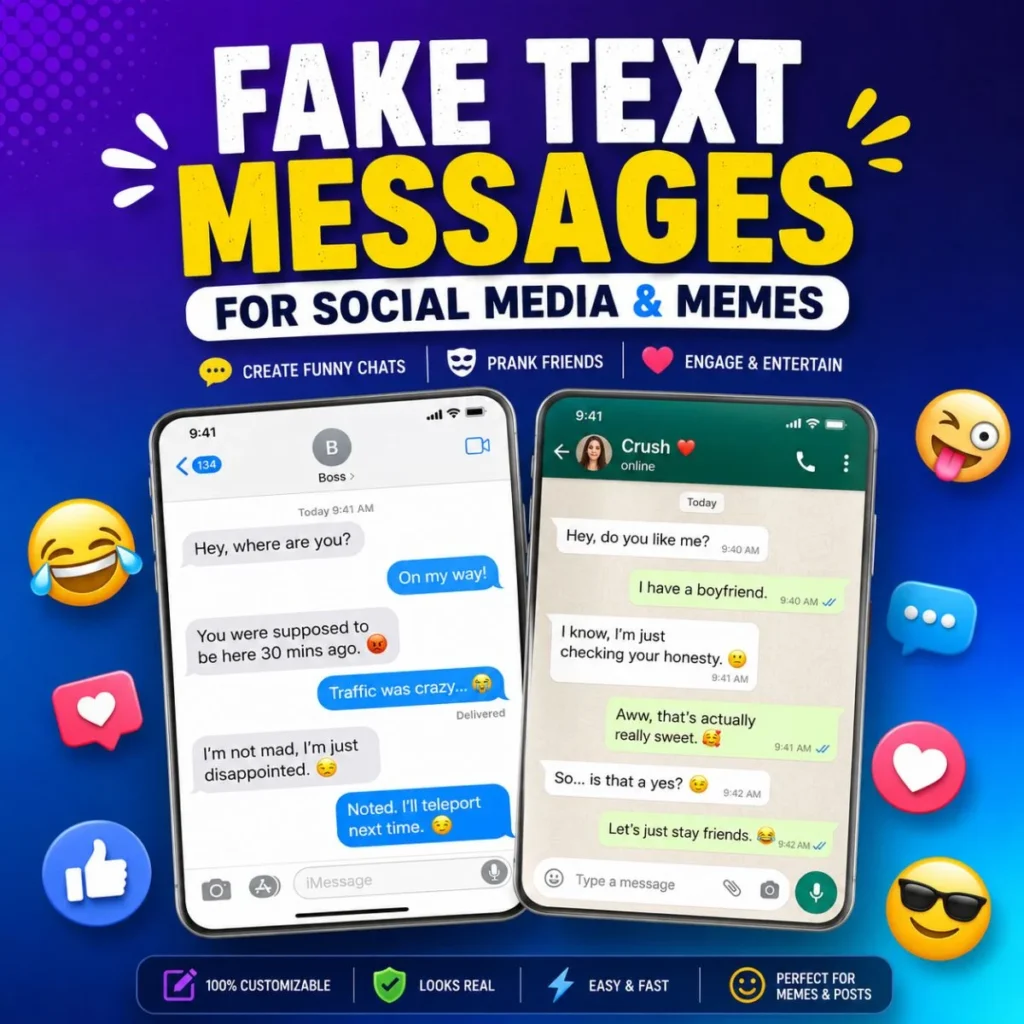
For social content, shorter is usually better. The conversation should communicate its joke or emotion quickly enough that someone can understand it while scrolling.
- A: “I need motivation.” B: “You can do it!” A: “I needed money, but thanks.”
- A: “What are your weekend plans?” B: “Recovering from the week.”
- A: “We need to stop spending.” B: “Agreed.” A: “So should we order food?” B: “Absolutely.”
- A: “New year, new me.” B: “What happened to last year’s new you?” A: “We don’t talk anymore.”
- A: “I have my life together.” B: “Prove it.” A: “I found my keys.”
- A: “I should be productive.” B: “You should.” A: “Thanks for the support.”
- A: “One episode?” B: “One episode.” A: “It’s 3 a.m.” B: “Worth it.”
- A: “How are you?” B: “I’m fine.” A: “Actually?” B: “Actually, I could use a snack.”
- A: “Let’s make plans.” B: “Okay.” A: “Great. What’s your availability?” B: “Emotionally or physically?”
- A: “I finally organized everything.” B: “Everything?” A: “Everything that was bothering me.”
- A: “Should I text them?” B: “No.” A: “You’re right.” B: “Why are you typing?”
- A: “I’m saving this conversation.” B: “Why?” A: “For evidence that you actually agreed with me.”
- A: “I have news.” B: “Good news?” A: “Interesting news.” B: “That’s never reassuring.”
- A: “Do you want the good news or bad news first?” B: “Neither. I choose peace.”
- A: “We’re adults.” B: “Technically.”
Dramatic Fake Text Messages for Stories
Fictional texting can be a powerful storytelling device. Instead of explaining a character’s feelings through narration, a few messages can reveal tension, hesitation, excitement, or a turning point.
- A: “You knew the whole time?” B: “I didn’t know how to tell you.”
- A: “Why didn’t you call?” B: “Because I knew I’d change my mind.”
- A: “I found the letter.” B: “Then you know the truth.”
- A: “We need to talk before tomorrow.” B: “I was afraid you’d say that.”
- A: “Are you really leaving?” B: “I think I have to.”
- A: “You could have told me.” B: “I wanted to. I just didn’t know how.”
- A: “I waited for you.” B: “I’m sorry.”
- A: “There’s something I never told you.” B: “Then tell me now.”
- A: “Do you still remember that night?” B: “I remember everything.”
- A: “I thought we were okay.” B: “So did I.”
- A: “Don’t open the door yet.” B: “Why?”
- A: “If I tell you, everything changes.” B: “Maybe everything needs to change.”
- A: “You were right.” B: “About what?” A: “About me being afraid.”
- A: “I can’t keep pretending.” B: “Then don’t.”
- A: “Meet me where we first met.” B: “I’ll be there.”
How to Make a Fake Text Message Look Natural
A believable fictional conversation is not necessarily one with perfect grammar. Real people use contractions, short replies, interruptions, unfinished thoughts, emojis, and different texting habits.
When creating a mock conversation, pay attention to the relationship between the characters. Two close friends might use jokes and shorthand, while coworkers may be more direct. Family members may ask practical questions, and fictional romantic characters may use warmer language.
A few details can make the difference:
- Give each person a distinct voice. One character might send short replies while another writes longer messages.
- Use realistic pacing. A conversation does not need every message to be the same length.
- Include small imperfections. Natural texting often contains contractions, casual punctuation, or quick corrections.
- Avoid overexplaining. People usually do not explain information the other person already knows.
- Match the relationship. A conversation between siblings should not sound exactly like one between coworkers.
- Keep fictional content labeled when appropriate. If a screenshot could be mistaken for a real exchange, identify it as a mockup, fictional conversation, or sample.
The strongest fake text message examples often feel ordinary. A simple “Are you home?” followed by an unexpected response can be more convincing than an elaborate conversation filled with dramatic language.
How to Personalize a Fake Text Message
If you’re using one of these examples in a creative project, change more than just the names. Think about what makes the fictional characters different from one another.
For example, replace a generic dinner invitation with a location that fits the story. Change “How was your day?” to something connected to an event the character experienced. If you’re creating a comedy screenshot, give the second character a recognizable sense of humor.
You can personalize a fictional conversation by changing:
- The relationship between the speakers
- Their personalities and texting habits
- The situation they’re discussing
- The length of their replies
- Their vocabulary
- The amount of punctuation
- Whether they use emojis
- The setting or time of day
- The emotional tone
- The fictional backstory behind the conversation
For a design mockup, fictional names and placeholder details are usually the safest choice. Avoid copying a real person’s identity, contact information, private messages, or recognizable personal details.
Tips for Creating a Convincing Fictional Chat
Whether you’re writing a story or designing a messaging interface, consistency matters more than complexity.
Start with a purpose. Decide what the conversation needs to accomplish. Is it supposed to be funny, romantic, informative, dramatic, or simply demonstrate a messaging feature?
Keep the exchange focused. Most short conversations work best when there is one central idea. A joke, invitation, misunderstanding, announcement, or emotional moment is enough.
Let the characters react. A conversation becomes more natural when one person responds specifically to what the other just said instead of delivering unrelated statements.
Don’t make every message polished. If every line sounds like a carefully written quote, the exchange may feel artificial. Short responses such as “Wait, what?”, “Seriously?”, “Okay 😂,” or “Give me a minute” can add realism.
Use fictional details. For mockups, choose invented names, sample phone numbers, fictional workplaces, and placeholder information. This keeps the design useful without accidentally presenting fabricated information about real people.
Label screenshots responsibly. If you’re publishing the conversation publicly, a small “fictional,” “mockup,” or “sample conversation” label can prevent confusion.
When a Fake Text Message Is Appropriate
There are plenty of legitimate reasons to create fictional text conversations.
Writers can use them to develop dialogue and character relationships. Designers can use sample conversations when demonstrating a messaging interface. Social-media creators can use fictional chats for memes and storytelling. Teachers and presenters can use sample conversations to illustrate communication scenarios.
They can also be useful for:
- Website and app prototypes
- UX/UI demonstrations
- Fiction and screenwriting
- Social-media graphics
- Comedy sketches
- Educational examples
- Marketing mockups
- Presentation slides
- Character development
- Content creation
- Personal creative projects
The important distinction is presentation. A fictional conversation should not be presented as authentic evidence of something that never happened, particularly when doing so could damage someone’s reputation, create confusion, or mislead an audience.
Copy-and-Paste Fake Text Message Templates
These simple templates are easy to adapt for fictional chats and creative projects.
- Unexpected news: A: “I have something to tell you.” B: “Okay… should I be worried?”
- Last-minute plan: A: “Are you free tonight?” B: “Maybe. Why?” A: “I have a plan.”
- Funny misunderstanding: A: “I thought you said 7.” B: “I said 7.” A: “It is 7:45.” B: “Exactly. Seven-ish.”
- Friendly check-in: A: “How are things?” B: “A little hectic, but I’m okay.” A: “If you need anything, I’m here.”
- Romantic moment: A: “I keep thinking about tonight.” B: “Me too. It was really special.”
- Family reminder: A: “Don’t forget dinner Sunday.” B: “Wouldn’t miss it.”
- Work update: A: “The final version is ready.” B: “Great. I’ll review it shortly.”
- Story cliffhanger: A: “I know what happened.” B: “Then you know why I couldn’t tell you.”
- Social-media joke: A: “I’m going to be productive today.” B: “That’s adorable.”
- Simple appreciation: A: “Thanks for being there.” B: “Always.”
FAQs About Fake Text Messages
What is a fake text message?
A fake text message is a fictional or simulated text conversation created for a specific purpose. It can be used for storytelling, comedy, app mockups, educational examples, social-media graphics, or other creative projects. The conversation is not presented as genuine evidence of a real exchange.
Why do people create fake text conversations?
People create fictional chats for many harmless reasons. Writers may use them to develop characters, designers may need sample content for a messaging interface, and creators may make them for memes or social posts. They can also demonstrate how a product or feature might work.
How can I make a fictional text conversation realistic?
Give each character a distinct communication style and make their responses fit the situation. Use natural contractions, short replies, occasional emojis, and realistic reactions. Avoid making every message sound perfectly polished or overly dramatic.
Can I use these examples in a story or social-media post?
Yes. You can adapt the examples for fictional stories, creative projects, mockups, memes, and similar uses. If an audience might reasonably mistake the conversation for a genuine exchange, label it clearly as fictional or a mockup.
Should I use real people’s names in a fake conversation?
It’s generally better to use fictional names and invented details, especially for public-facing content. Using someone’s identity to create a fabricated conversation can cause confusion or misrepresentation. For mockups, fictional names and placeholder information are usually the better choice.
Can a fake text message be used as proof of a real conversation?
A fabricated conversation should not be presented as authentic evidence. If a screenshot is fictional, describing it as real can mislead people and potentially cause serious consequences. Keep creative examples clearly identified as fictional, simulated, or illustrative.
Conclusion
A good fake text message does not need to be complicated. The most useful examples are often short, conversational, and built around a recognizable situation—a friend making plans, a family member checking in, a fictional couple sharing a sweet moment, or two characters revealing something important.
For creative work, focus on the relationship between the speakers and give each character a voice that feels different. A few natural details can make a fictional chat much more engaging than a long exchange packed with unnecessary dialogue.
Whether you’re creating a meme, writing a story, designing a messaging app, or preparing a presentation, these examples give you a starting point you can adapt to your own idea. Just keep fictional conversations clearly fictional whenever there is a possibility of confusion.
The best fake text message is ultimately one that serves its purpose while remaining honest about what it is: a creative conversation, not fabricated evidence of a real one.

Muhammad Sarfraz is a content creator and author at Message Ideas Daily, passionate about creating heartfelt, practical, and meaningful message ideas that help people express their feelings and connect with others.