

When someone dies, finding the right words can feel almost impossible. You may want to comfort a grieving friend, support a family member, send sympathy to a coworker, or write a respectful message after hearing about a loss. Yet grief is deeply personal, and even a simple sentence can feel difficult to write when emotions are heavy.
A thoughtful death condolence message does not need to be long or elaborate. What matters most is sincerity, compassion, and respect for the person who is grieving. A few genuine words can let someone know they are not alone during an incredibly painful time.
Below, you will find heartfelt condolence messages for different relationships and circumstances, including short sympathy texts, messages for friends and family, professional condolences, religiously sensitive wording, social media messages, and deeply emotional expressions of support. You can copy one as it is or personalize it with the person’s name and a meaningful memory.
Heartfelt Death Condolence Messages

A sincere condolence message should acknowledge the loss without trying to explain away the grief. Avoid forcing positivity or telling someone how they should feel. Instead, offer sympathy, presence, and kindness.
These messages work well when you want something warm and genuine without making the message overly complicated.
- I am deeply sorry for your loss. May you find strength, comfort, and peace in the days ahead.
- My heart goes out to you and your family during this incredibly difficult time. Please know that you are in my thoughts.
- There are no perfect words for a loss like this. I am truly sorry, and I am here for you whenever you need someone.
- Sending you my deepest sympathy and heartfelt condolences. May the love surrounding you bring some comfort through this painful time.
- I was saddened to hear about your loss. Please accept my sincere condolences, and know that you and your family are in my thoughts.
- My deepest sympathies to you and your loved ones. I hope the memories you shared bring moments of comfort when the days feel especially difficult.
- I am so sorry you are going through this. May you be surrounded by people who care for you and support you through your grief.
- Thinking of you with sympathy and care. I hope you find strength in the love, memories, and people surrounding you.
- Please accept my heartfelt condolences. I wish I could take away some of your pain, but I hope you know you do not have to face it alone.
- My heart is with you during this heartbreaking time. Wishing you comfort, strength, and peace as you remember someone so important to you.
- I am truly sorry for your loss. May the beautiful memories you shared remain a source of comfort for you and your family.
- Keeping you close in my thoughts during this difficult time. Please take all the time you need to grieve and heal.
- Sending sincere sympathy to you and your family. May each passing day bring a little more comfort and strength.
- I cannot imagine how difficult this must be for you. Please know that I care and am here whenever you need support.
- My deepest condolences. May you find comfort in the people who love you and in the memories that will always remain.
Short Death Condolence Messages
Sometimes a short message is more appropriate, particularly for a text, card, workplace message, or quick note. A brief condolence can still carry genuine warmth when it is carefully worded.
- I am so sorry for your loss. My deepest condolences to you and your family.
- Thinking of you and sending heartfelt sympathy during this difficult time.
- My heart goes out to you. I am truly sorry for your loss.
- Please accept my deepest condolences. Wishing you strength and peace.
- So sorry to hear about your loss. Keeping you and your family in my thoughts.
- Sending you love, comfort, and strength during this heartbreaking time.
- My sincere condolences to you and everyone who loved them.
- I am thinking of you and wishing you comfort in the days ahead.
- My deepest sympathy. May you find peace and strength through this difficult time.
- I am truly sorry. Please know that I am here for you.
- Sending my heartfelt condolences and keeping your family in my thoughts.
- Wishing you strength today and comfort in the days ahead.
- My thoughts are with you during this painful time.
- I am so sorry. May the memories you shared bring you comfort.
- With deepest sympathy and sincere condolences to you and your family.
Condolence Messages for a Friend

Losing someone can leave a friend feeling overwhelmed, isolated, or unsure of what comes next. When writing to a close friend, you can be more personal while still allowing them space to grieve.
The most meaningful messages often communicate one simple idea: I am here, and you do not have to go through this alone.
- I am so sorry, my friend. I know there are no words that can make this easier, but I am here for you through all of it.
- My heart hurts for you. Please do not feel that you have to be strong around me. Whatever you need, I am here.
- I wish I could take away some of your pain. Until then, please remember that you have a friend beside you whenever you need one.
- I am thinking about you constantly and sending you all the strength I can. Take things one moment at a time.
- I know how much this person meant to you, and I am truly sorry you are facing this loss.
- You do not need to respond to this message. I simply wanted you to know that I am thinking of you and that I care about you deeply.
- I am here for the quiet days, the difficult days, and everything in between. You never have to apologize for grieving.
- Your loss is heartbreaking, and I am so sorry. I hope the memories you made together stay close to your heart.
- I cannot make this pain disappear, but I can promise that you will not have to carry it alone.
- Sending you the biggest hug from afar. Take all the time you need, and remember that I am only a call away.
- I am deeply sorry, my friend. May you find moments of peace among the sadness and strength in the people around you.
- You have been on my mind since I heard the news. I am here for whatever you need, even if you simply need someone to sit quietly with you.
- Grief has no schedule, so please be gentle with yourself. I will be here for you for as long as you need.
Death Condolence Messages for Family
When a relative loses someone they love, a family condolence message can acknowledge both the individual grief and the pain shared by everyone.
- My deepest condolences to our family during this painful time. May we find strength in one another and cherish the memories we share.
- I am heartbroken by our loss. May we support each other with patience, love, and understanding in the days ahead.
- We have lost someone deeply loved, and words cannot express how much they will be missed.
- My thoughts and prayers are with everyone in the family. May we find comfort in the memories and love that remain.
- This is an incredibly difficult time for all of us. Let us stay close and support one another through the grief.
- May the love our family shares help us through this painful loss. Their memory will always remain part of our lives.
- I am sending my deepest sympathy to everyone grieving this loss. May we find comfort in being together.
- We may be hurting in different ways, but we share the same love and loss. May we have strength for each other.
- My heart is with our family. May the memories of happier days bring some light during this difficult period.
- I am deeply saddened by this loss. May we honor their memory by carrying the love they gave us forward.
- Thinking of every member of the family with love and sympathy. May we find comfort in each other.
- Their absence will be deeply felt, but so will the love and memories they left behind.
Condolence Messages for a Coworker or Professional Contact
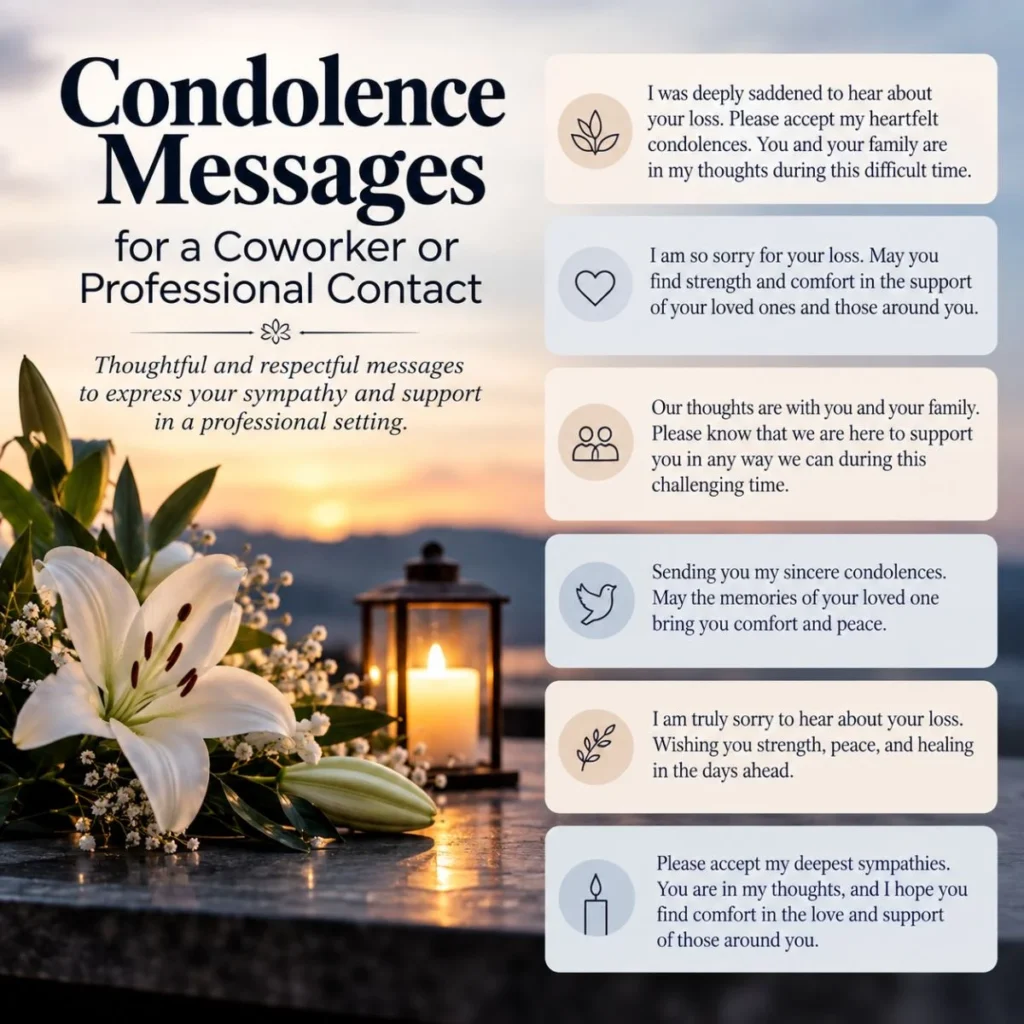
A workplace condolence should be compassionate without becoming overly personal. If you do not know the person or their family well, keep the wording respectful, simple, and sincere.
- Please accept my sincere condolences for your loss. Wishing you and your family strength and comfort during this difficult time.
- I was very sorry to hear about your loss. Please know that my thoughts are with you and your family.
- My deepest sympathy to you and your loved ones. Please take the time you need during this difficult period.
- Sending my heartfelt condolences. I hope you and your family find comfort and support in the days ahead.
- I am deeply sorry for your loss. Please accept my sincere sympathy and warmest thoughts during this difficult time.
- My condolences to you and your family. Wishing you peace, strength, and comfort as you navigate this loss.
- I was saddened to learn of your loss. Please know that you have my sincere sympathy.
- Thinking of you during this difficult time and wishing you and your family comfort and strength.
- Please accept my deepest condolences. I hope the support of family, friends, and loved ones brings you comfort.
- My sincere sympathy to you and your family. Please do not hesitate to reach out if there is anything I can reasonably do to support you.
- I am very sorry to hear this news. Wishing you peace and strength during the days ahead.
- Please accept my heartfelt condolences. My thoughts are with you as you and your family remember your loved one.
Religious and Faith-Sensitive Condolence Messages
Religious condolences can be meaningful when you know the grieving person’s faith and are confident that the wording will be appropriate. When you are uncertain about someone’s beliefs, a neutral message is usually the safest choice.
For Muslim recipients, expressions such as Inna lillahi wa inna ilayhi raji’un are commonly used following a death. Other faith traditions may have their own customs, prayers, and expressions of comfort.
- Inna lillahi wa inna ilayhi raji’un. May Allah grant them mercy and give your family patience and strength.
- Inna lillahi wa inna ilayhi raji’un. May Allah forgive the deceased, bless them with peace, and comfort everyone who is grieving.
- May Allah give you and your family sabr, strength, and comfort during this difficult time. My deepest condolences.
- My heartfelt condolences to you and your family. May Allah grant the departed mercy and give you strength through this loss.
- May God comfort you and your family, surround you with love, and give you strength as you mourn.
- Keeping you and your family in my prayers. May God’s presence bring comfort during this painful season.
- May the Lord bring peace to your heart and strength to your family as you remember your loved one.
- Praying that you find comfort, courage, and peace during this difficult time.
- May God’s love surround your family and provide comfort as you grieve this heartbreaking loss.
- My deepest condolences. May your faith, family, and cherished memories give you strength in the days ahead.
- May the departed rest in peace, and may those left behind find comfort and strength.
- Sending prayers and heartfelt sympathy to your family during this time of sorrow.
Deep and Meaningful Condolence Messages

Sometimes the relationship was especially important, and a simple “sorry for your loss” does not feel sufficient. These messages offer a little more emotional depth without trying to explain grief.
- Some people leave such a deep mark on our lives that their absence can never truly be measured. I am deeply sorry for your loss.
- A life may end, but the love, memories, lessons, and moments shared with someone can remain with us for years to come.
- I hope that, in time, the painful memories of this loss will be joined by the beautiful memories of the life you shared.
- Losing someone we love changes the shape of our days. I hope you are surrounded by people who understand and care for you through every difficult moment.
- There may be days when the sadness feels overwhelming and others when a memory brings a smile. Be gentle with yourself through all of them.
- Your loved one’s presence may no longer be beside you, but the impact they made on your life will continue through the memories you carry.
- Grief is a reflection of love, and I hope you give yourself permission to feel whatever comes without rushing the process.
- Some goodbyes are far too difficult to put into words. I am deeply sorry and hope you find comfort in every precious memory.
- The people we love become part of our stories. Even after they are gone, the chapters they helped write remain with us.
- I hope that someday the memories that hurt today will become memories you can hold close with gratitude and love.
- There is no correct way to grieve and no timetable for missing someone. Please be patient and compassionate with yourself.
- May the love that surrounded your relationship continue to give you strength long after this painful moment has passed.
Condolence Messages for Someone Who Lost a Parent
The death of a mother or father can affect every part of a person’s life. A message in this situation should recognize the significance of the relationship without making assumptions about how the person feels.
- I am deeply sorry for the loss of your mother. I hope her love and the memories you shared remain a source of comfort.
- My heartfelt condolences on the loss of your father. Wishing you and your family strength during this difficult time.
- Losing a parent is an enormous loss. I am thinking of you and hoping you find comfort in the life and memories you shared.
- Your mother clearly meant so much to you. May the love she gave you continue to stay close to your heart.
- I am so sorry about your dad. I hope the memories of his guidance, kindness, and presence bring you comfort.
- Sending you my deepest sympathy after the loss of your parent. Please take care of yourself and lean on the people who love you.
- A parent’s place in our lives can never truly be replaced. I am deeply sorry for your loss.
- My heart goes out to you after this heartbreaking loss. May you find strength in the memories your family created together.
Condolence Messages for Someone Who Lost a Spouse
The loss of a husband or wife can change someone’s daily life in profound ways. A supportive message should be gentle and avoid assuming what the grieving person needs.
- I am deeply sorry for the loss of your beloved spouse. My heart is with you as you face this incredibly difficult time.
- I cannot imagine how painful this must be. May the love and memories you shared bring you comfort when you need it most.
- Your life together created countless memories that will always matter. I am truly sorry for your loss.
- Sending my deepest sympathy to you. Please know that you are surrounded by people who care about you.
- I am thinking of you with great care and sympathy. May you find strength one day at a time.
- The love you shared was meaningful and lasting. I hope those memories bring comfort during the difficult days ahead.
- I am so sorry. There is no need to find the right words or pretend to be okay. Take each day at your own pace.
- My deepest condolences to you and your family. Wishing you comfort, strength, and gentle moments of peace.
One-Line Condolence Messages

These are useful for sympathy cards, social media replies, text messages, or situations where a longer message may not feel appropriate.
- Deepest condolences to you and your family during this heartbreaking time.
- May loving memories bring you comfort and strength.
- Thinking of you and holding you close in my thoughts.
- My heart goes out to you and everyone grieving this loss.
- Wishing you peace, strength, and comfort in the days ahead.
- So sorry for your loss; may you find comfort in cherished memories.
- Sending sincere sympathy and heartfelt condolences to your family.
- May you be surrounded by love and support as you grieve.
- Keeping you in my thoughts during this difficult time.
- My deepest sympathy for your loss.
- May their memory remain a blessing to everyone who loved them.
- Sending you strength for today and hope for tomorrow.
- I am truly sorry and am thinking of you with care.
- May peace and comfort find you during this difficult time.
- With heartfelt sympathy, I am thinking of you and your family.
Condolence Messages for Social Media
Public condolences require extra sensitivity. Keep the message respectful and avoid sharing personal details that the family has not made public. A short expression of sympathy is often enough.
- My deepest condolences to the family. Wishing everyone strength, comfort, and peace during this difficult time.
- So sorry for your loss. May the beautiful memories you shared bring comfort to everyone who loved them.
- Sending heartfelt sympathy to the family and all those mourning this heartbreaking loss.
- My thoughts are with the family during this difficult time. May you find strength in one another.
- Keeping the family in my thoughts and prayers. May you find comfort and peace in the days ahead.
- A beautiful life will always leave beautiful memories behind. My sincere condolences to everyone grieving.
- Sending love and sympathy to everyone affected by this loss. May you find comfort in treasured memories.
- My heart goes out to the family. Wishing you strength as you navigate this painful time.
- Deepest sympathy to everyone who knew and loved them. May their memory continue to bring warmth and love.
- Thinking of the family with compassion and care. May you find strength and support in one another.
How to Choose the Right Death Condolence Message
The best condolence message depends on your relationship with the grieving person, the circumstances, and the communication method.
Consider your relationship first. A close friend may appreciate a personal message, while a coworker may prefer something simple and professional.
Acknowledge the loss directly. Saying “I am sorry for your loss” is not inadequate. It can be one of the most appropriate things to say because it recognizes the pain without trying to solve it.
Do not make the message about yourself. Even if you have experienced a similar loss, the person’s grief should remain at the center of the conversation.
Avoid assumptions. Statements such as “I know exactly how you feel” can unintentionally minimize someone’s individual experience.
Respect religious beliefs. Use religious language only when you know it is appropriate for the person or family.
Offer practical support when you genuinely mean it. Instead of saying “Let me know if you need anything,” you can offer something specific, such as helping with errands, meals, transportation, or other practical responsibilities.
How to Personalize a Condolence Message
A copied message can provide a starting point, but one personal detail can make it feel much more genuine.
You might mention the deceased person’s name, a positive quality, a memory, or the impact they had on others.
For example, instead of writing:
“I am sorry for your loss. My condolences.”
You could write:
“I am so sorry for your loss. I will always remember how warmly your father welcomed everyone around him. He clearly made a lasting impression on so many people.”
You do not need to write a long story. A single authentic memory can make a short condolence feel personal.
If you did not know the deceased, focus on the person who is grieving:
“I was very sorry to hear about your mother. I know how important she was to you, and I am thinking of you and your family.”
The goal is not to find perfect words. It is to communicate genuine care.
What to Avoid in a Condolence Message
Even well-intentioned words can sometimes hurt when someone is grieving. Avoid phrases that pressure the person to move on, minimize the loss, or assume how they should feel.
Try not to say:
- “Everything happens for a reason.”
- “At least they lived a long life.”
- “You need to stay strong.”
- “I know exactly how you feel.”
- “It was probably for the best.”
- “You should be over it by now.”
- “They are in a better place,” unless you know the person’s beliefs and are confident the wording will comfort them.
- “Don’t cry.”
- “You have to move forward.”
- “I know this is God’s plan,” unless you know that religious framing is welcome.
Instead, keep the focus on compassion, presence, and respect.
When to Send a Condolence Message
There is rarely a perfect moment to reach out. If you have just learned about the death, sending a sincere message sooner rather than waiting until you have found flawless wording is often appropriate.
You can send condolences through a text, phone message, email, sympathy card, or private social media message depending on your relationship.
A second message can also be meaningful later. Grief does not disappear after the funeral or memorial service, and people may continue to need support weeks or months afterward.
If you know the person well, consider checking in later with something simple:
“I have been thinking about you today. No need to reply—I just wanted you to know I am here.”
That kind of message can be especially meaningful because it shows that your support did not end after the initial announcement.
Frequently Asked Questions
What is a good death condolence message?
A good condolence message is sincere, respectful, and focused on the grieving person. A simple message such as, “I am deeply sorry for your loss. My thoughts are with you and your family during this difficult time,” is appropriate in many situations.
What should I say instead of “sorry for your loss”?
You can say, “My heart goes out to you,” “I am thinking of you,” “Please accept my deepest condolences,” or “I am here for you during this difficult time.” The best choice depends on your relationship with the person.
How long should a condolence message be?
There is no required length. A short text of one or two sentences can be meaningful, while a close friend or family member may appreciate a longer personal message. Sincerity matters more than word count.
Should I mention the deceased person by name?
Yes, when appropriate. Using their name can make the message feel personal and acknowledge the individual who died. If you did not know them well, you can simply refer to them as the person’s mother, father, spouse, friend, or loved one.
Is it appropriate to send condolences by text?
Yes. Text messaging can be appropriate, particularly when you want to reach someone quickly and respectfully. Keep the message sincere and do not expect an immediate response.
What should I say to someone who is grieving months after a death?
A simple check-in can mean a great deal. You might say, “I was thinking about you today and wanted to see how you are doing. There is no need to respond—I just wanted you to know I remember and care.”
Final Thoughts
Finding the right words after a death can be difficult because grief does not have a simple solution. You do not need to write something profound or perfectly capture another person’s pain. A sincere expression of sympathy, a meaningful memory, or a quiet reminder that you are present can be enough.
The best death condolence message is one that respects the grieving person’s emotions and relationship with the person they lost. Choose wording that matches how well you know them, personalize it when you can, and avoid phrases that try to rush the grieving process.
If you are unsure what to write, keep it simple: acknowledge the loss, express genuine sympathy, and offer your presence. Sometimes the most comforting message is not the one with the most beautiful words, but the one that quietly says, “I see your pain, I care about you, and you are not alone.”
Save the messages that feel right for different situations, personalize them when needed, and let your sincerity do the rest.

Muhammad Sarfraz is a content creator and author at Message Ideas Daily, passionate about creating heartfelt, practical, and meaningful message ideas that help people express their feelings and connect with others.