

When someone you care about loses a loved one, knowing what to say can feel almost impossible. You may want to offer comfort, but every sentence can seem too small for the grief they are experiencing. Sometimes, the most meaningful message is not the one with the most beautiful words—it is the one that feels sincere, gentle, and present.
A thoughtful deepest condolences message can remind someone that they are not alone during one of the hardest moments of their life. You do not need to explain their grief or try to make the pain disappear. A simple expression of sympathy, remembrance, and support can mean more than you realize.
Below, you will find heartfelt messages for different relationships and situations, including short condolences, messages for close friends and family, professional condolences, faith-sensitive wording, and longer personal notes. Choose the words that feel natural to you, then add the person’s name or a specific memory when appropriate.
Heartfelt and Deep Condolences Messages

These messages are suitable when you want to express genuine sympathy without sounding overly formal. They acknowledge the pain of loss while offering quiet support and compassion.
- My deepest condolences to you and your family. May you find comfort in the love surrounding you during this painful time.
- I am deeply sorry for your loss. My heart is with you, and I hope the memories you shared bring you moments of comfort.
- Please accept my heartfelt condolences. There are no perfect words for a loss like this, but I hope you know you are not facing it alone.
- My heart goes out to you during this incredibly difficult time. Wishing you strength, peace, and comfort in the days ahead.
- I am so sorry for the loss of someone so dear to you. May their memory remain a source of love and comfort for years to come.
- Sending my deepest sympathy to you and your family. I hope the kindness of those around you helps carry you through this difficult season.
- Words feel so inadequate at a time like this. Please know that I am thinking of you and holding you close in my heart.
- I cannot take away your pain, but I hope you feel surrounded by people who care about you and are here whenever you need them.
- My deepest sympathies are with you. May the love, memories, and moments you shared remain close to your heart.
- I am truly sorry that you are going through this loss. Please give yourself all the time and space you need to grieve.
- May you find strength in the beautiful memories you created together and comfort in knowing how deeply your loved one was cherished.
- My heart is heavy for you. I am sending you love, strength, and my sincerest condolences during this heartbreaking time.
- I am thinking of you with great sympathy and care. May the days ahead become a little gentler as you hold on to the memories that matter most.
- Please know that my thoughts are with you and your family. I am deeply sorry for your loss.
- May you be surrounded by understanding hearts, loving memories, and the quiet support you need right now.
Short Deepest Condolences Messages
Sometimes a short message is the right choice, especially for a text, sympathy card, social post, or quick personal note. These messages keep the wording simple while still expressing genuine care.
- My deepest condolences to you and your family. ❤️
- I am truly sorry for your loss. Thinking of you and your loved ones.
- Sending you my deepest sympathy and heartfelt prayers.
- My heart goes out to you during this difficult time.
- I am so sorry. May you find comfort in loving memories.
- Please accept my deepest condolences and sincere sympathy.
- Thinking of you and wishing you strength through this painful time.
- My deepest sympathy to you and everyone who loved them.
- Holding you in my thoughts and sending you strength.
- I am deeply sorry for your loss. May their memory bring you comfort.
- Sending love and sympathy as you navigate this difficult loss.
- May you find peace in the memories you hold so dearly.
- My heart is with you. I am so sorry for what you are going through.
- Wishing you comfort, strength, and caring people around you.
- Please know that you are in my thoughts during this heartbreaking time.
- Sending my sincerest condolences to you and your family.
- I am thinking of you with love and deepest sympathy.
- May the love around you help you through these difficult days.
Deep Condolences Messages for a Friend

Losing someone is difficult, but watching a close friend experience that loss can leave you unsure how to help. With a friend, it is often appropriate to sound personal and available rather than overly formal. Let them know that you are there without putting pressure on them to respond.
- I am so sorry, my friend. I know there are no words that can make this easier, but I am here for you in whatever way you need.
- My heart hurts for you. Please do not feel like you have to be strong every moment. Lean on me whenever you need to.
- I cannot imagine how painful this must be for you. I am sending you all my love and will be here beside you through the difficult days ahead.
- I am deeply sorry for your loss. You do not have to go through this alone—I am only a call or message away.
- My heart goes out to you, my friend. I hope the memories of the good times bring you small moments of peace when the days feel especially heavy.
- I wish I could take away some of your pain. Since I cannot, I will simply be here, listening, helping, and standing beside you whenever you need me.
- I am thinking about you and your family with so much love. Please take care of yourself and remember that you have people who care deeply about you.
- There is no need to find the right words right now. Just know that I love you, I care about you, and I am here.
- I am so sorry you have to say goodbye to someone you love. May their memory stay close and bring you comfort when you need it most.
- My deepest condolences, my friend. Take each day as it comes, and never hesitate to reach out when you need a shoulder, a conversation, or simply company.
- I know this is an incredibly painful chapter in your life. I hope you feel my support even when I cannot be there in person.
- Sending you strength and love today. I will continue thinking of you in the days ahead, not just today.
Deep Condolences Messages for Family
A family member’s death can affect an entire household, making a message to the family especially meaningful. These messages work well when addressing parents, siblings, spouses, children, or an entire family.
- My deepest condolences to your entire family. May you find strength in one another and comfort in the memories you share.
- I am deeply sorry for your family’s loss. May your loved one’s life, love, and memory remain a lasting part of your family.
- My heart goes out to every member of your family during this difficult time. Wishing you peace, strength, and comfort.
- Please accept my deepest sympathy. May your family stay close and support one another as you move through this painful loss.
- I am so sorry for the loss your family is facing. May the love you share help you carry one another through the hardest days.
- Sending heartfelt condolences to your family. May the beautiful memories you created together remain a source of comfort.
- My thoughts and prayers are with your family. I hope you find moments of peace amid the sadness.
- Losing someone who is part of the heart of a family leaves an enormous emptiness. I am deeply sorry for your loss and thinking of all of you.
- May your family find courage in togetherness and comfort in every treasured memory of your loved one.
- My sincerest condolences to you and your family. May you feel surrounded by love and support during this difficult time.
- I am holding your whole family in my thoughts. May you have the strength to face each day and the comfort of knowing you are surrounded by care.
- My heart is with your family as you mourn this heartbreaking loss. May your loved one’s memory continue to bring warmth to your lives.
Condolences Messages for Someone Who Lost a Parent
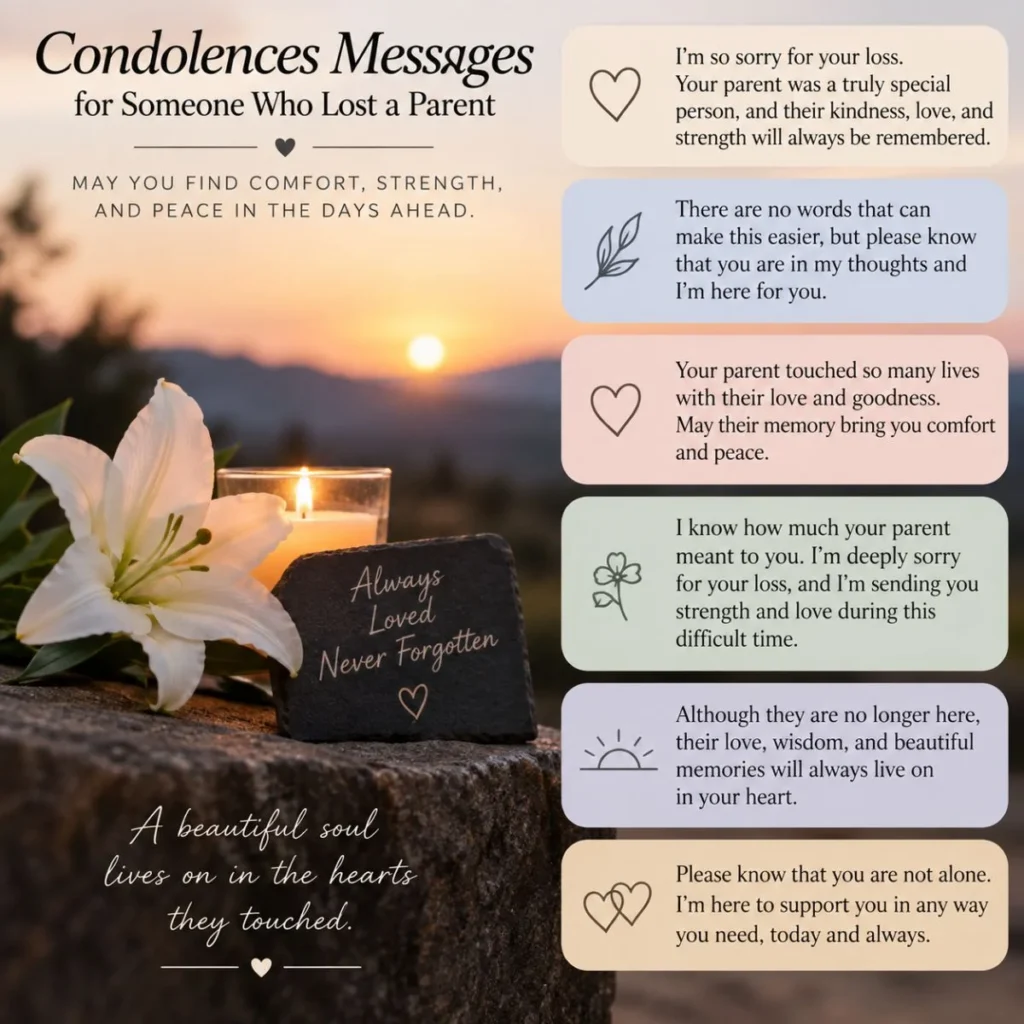
The loss of a mother or father can bring a profound sense of absence. A message should recognize the importance of that relationship without assuming exactly how the grieving person feels.
- I am deeply sorry for the loss of your mother. May the love she gave you remain a part of your life always.
- My deepest condolences on the passing of your father. I hope the lessons, memories, and moments you shared stay close to your heart.
- I am so sorry you have lost your mom. May you find comfort in remembering all the ways she made your life brighter.
- My heart goes out to you after the loss of your dad. Wishing you strength and peace as you navigate this difficult time.
- Your parent played such an important part in shaping the person you are. I am deeply sorry for your loss and thinking of you with care.
- May the memories of your mother bring warmth to your heart even during the moments when you miss her most.
- I am truly sorry about your father. I hope the love and wisdom he shared with you continue to guide you throughout your life.
- Losing a parent changes so much, and I am sorry you are facing this pain. Please know that I am here for you.
- My deepest sympathy is with you. May you find comfort in the years of love, memories, and experiences you shared with your parent.
- I am holding you close in my thoughts. May your parent’s memory remain a beautiful and enduring part of your life.
Condolences Messages for the Loss of a Spouse or Partner
When someone loses a husband, wife, or life partner, words should be especially gentle. Avoid trying to explain the grief or offering quick reassurance. Focus instead on sympathy and presence.
- I am deeply sorry for the loss of your beloved partner. My heart is with you as you face this unimaginable absence.
- Please accept my deepest condolences. I hope the love you shared gives you moments of comfort amid the pain.
- I am so sorry you have lost the person who shared so much of your life. May every precious memory remind you of the love you built together.
- My heart goes out to you. I hope you are surrounded by people who will listen, help, and stay close whenever you need them.
- There are no words large enough for a loss like this. Please know that you are in my thoughts and that I am deeply sorry.
- May the memories of your life together remain close to your heart and remind you of the love that was shared.
- I am thinking of you with the deepest sympathy. I hope you are given the time, space, and support you need to grieve in your own way.
- I am so sorry for the loss of your life partner. May the love and memories you shared remain a source of strength.
- My deepest condolences to you. I hope you never feel that you have to carry this grief without support.
- Sending you gentle thoughts and heartfelt sympathy. I am here for you, today and in the difficult days ahead.
Professional and Respectful Condolences Messages

A coworker, manager, client, teacher, or professional acquaintance may need a message that is compassionate without becoming too personal. Keep the wording respectful and sincere.
- Please accept my deepest condolences for your loss. My thoughts are with you and your family during this difficult time.
- I was very sorry to hear about your loss. Wishing you and your family strength, comfort, and peace.
- Please accept my sincere sympathy. I hope you are surrounded by family and friends who can offer comfort during this difficult period.
- My deepest condolences to you and your loved ones. Please take the time you need to be with your family and care for yourself.
- I am very sorry for your loss. You and your family are in my thoughts during this difficult time.
- Please accept my heartfelt condolences. Wishing you peace and strength in the days ahead.
- I was saddened to hear of your loss. My sincere sympathy goes to you and your family.
- Thinking of you with sympathy and wishing you comfort as you navigate this difficult time.
- My deepest sympathy is with you. May you find strength and support from those closest to you.
- Please know that you have my sincere condolences and my thoughts during this challenging time.
- I am sorry to hear about your loss. Wishing you and your family comfort and strength.
Faith-Based Condolences Messages
Religious condolences can be deeply comforting when you know the recipient welcomes faith-based language. If you are uncertain about someone’s beliefs, a neutral message is usually the safer choice.
- May God surround you and your family with comfort and strength during this difficult time.
- May the Lord give you peace, carry you through your grief, and keep your loved one’s memory close to your heart.
- My deepest condolences. May God grant your family strength, comfort, and peace in the days ahead.
- Keeping you and your family in my prayers and asking God to bring you comfort during this painful time.
- May your faith give you strength when the days feel difficult, and may God’s love surround you and your family.
- I am deeply sorry for your loss. May God bless you with peace and surround you with people who care.
- May the Lord comfort your heart and give you strength as you mourn the loss of someone so dear.
- My thoughts and prayers are with you. May you find comfort in your faith and in the precious memories you hold.
- May God give your family courage and peace as you walk through this difficult season of grief.
- Sending my deepest sympathy and prayers. May you feel God’s presence and comfort during this heartbreaking time.
Condolences Messages for a Sudden or Unexpected Loss

An unexpected death can leave people shocked as well as heartbroken. In these situations, avoid trying to make sense of what happened. Acknowledge the shock and offer support.
- I am deeply sorry for this sudden and heartbreaking loss. Please know that you and your family are in my thoughts.
- I was shocked and saddened to hear the news. My deepest condolences to you and everyone who loved them.
- There are no words for a loss that comes so unexpectedly. I am truly sorry and am thinking of you during this painful time.
- My heart goes out to you after such an unexpected loss. May you have the support and care you need in the days ahead.
- I cannot imagine how difficult it must be to process such a sudden loss. Please know that you are not alone.
- I am deeply sorry that you are facing this unexpected heartbreak. Sending you strength, sympathy, and love.
- This news is incredibly painful to hear. My deepest condolences to you and your family.
- I wish I had words that could make this moment easier. Please accept my heartfelt sympathy and know that I am thinking of you.
- May the people who love you surround you with patience, kindness, and support as you process this loss.
- I am so sorry. Take things one moment at a time, and know that you do not have to face the difficult days alone.
One-Line Condolences for a Text, Card, or Social Post
When you need just one thoughtful sentence, these options can express sympathy without requiring a long message.
- May the memories of your loved one bring you comfort when you need it most.
- Sending my deepest sympathy and heartfelt condolences to you and your family.
- My heart is with you as you mourn this profound loss.
- May love surround you and give you strength through the days ahead.
- Thinking of you with compassion, sympathy, and heartfelt care.
- I am deeply sorry for your loss and wishing you peace during this difficult time.
- May your cherished memories bring light to the darkest days.
- Sending you strength for today and comfort for the days ahead.
- My deepest condolences; may your loved one’s memory always remain close.
- Holding you and your family in my thoughts during this painful time.
- May you find comfort in the love that remains and the memories you will always carry.
- My sincere condolences to you and everyone grieving this heartbreaking loss.
How to Personalize a Condolence Message
A message becomes much more meaningful when it sounds like it came from you rather than from a collection of standard phrases. You do not need to write something complicated. A few sincere details can make a simple condolence feel deeply personal.
Start by acknowledging the loss directly. Saying, “I was so sorry to hear about your mother” can feel warmer than a completely general statement. If you knew the person who died, mention something genuine about them.
For example, you might write:
“I will always remember how warmly your father welcomed everyone into his home.”
A specific memory gives the grieving person something tangible to hold on to. It also shows that you are remembering their loved one as a person rather than treating the loss as an abstract event.
You can also offer practical support, but make the offer specific. Instead of saying, “Let me know if you need anything,” consider saying, “I can bring dinner by Thursday” or “I am free this weekend if you would like some company.”
Most importantly, do not pressure the grieving person to respond. Your message is an offering of care, not a conversation they are obligated to continue.
How to Choose the Right Condolences Message
The best message depends on your relationship with the grieving person and your relationship with the person who died.
For a close friend, use warmer and more personal language. Let them know you are available and willing to stay beside them beyond the immediate aftermath.
For a coworker or professional contact, keep the message respectful and sincere. You can express sympathy without asking for personal details.
For a family member, a personal memory, shared experience, or expression of family support can make the message more meaningful.
For a text message, short and heartfelt is usually enough. The recipient may be receiving many messages, so a few sincere lines can be easier to absorb.
For a sympathy card, you have more room to write a longer personal note. Consider adding a memory or describing one quality you admired about the person who passed away.
If you are unsure about religious beliefs, choose neutral wording such as “I am thinking of you,” “I am deeply sorry,” or “I hope you find comfort.” Faith-based expressions are best reserved for situations where you know they will be welcome.
What to Avoid Saying in a Condolence Message
Good intentions can sometimes lead to words that unintentionally minimize someone’s grief. Avoid phrases that suggest they should already be moving on or that their loss has a simple explanation.
Try not to say:
- “Everything happens for a reason.”
- “At least they lived a long life.”
- “You need to stay strong.”
- “I know exactly how you feel.”
- “They are in a better place,” unless you know the person’s beliefs.
- “Time heals everything.”
- “You should try to move on.”
These statements may be intended as comfort, but grief is personal, and there is no fixed timeline for it.
Instead, acknowledge the loss without trying to solve it. “I am so sorry,” “I am thinking of you,” and “I am here for you” can be much more appropriate.
You also do not need to ask for details about the death unless the grieving person chooses to share them. A condolence message should create space for their feelings rather than require them to explain what happened.
Frequently Asked Questions About Deepest Condolences Messages
What is the deepest condolences message to send someone?
The most meaningful condolence message is sincere, personal, and appropriate for your relationship with the grieving person. A simple message such as, “I am deeply sorry for your loss. My heart is with you, and I am here whenever you need me,” can be more comforting than elaborate wording.
How do you express deepest sympathy in a message?
Acknowledge the loss, express genuine sympathy, and offer support. You can also mention a positive memory if you knew the person who died. Avoid trying to explain the loss or tell the person how they should grieve.
What can I say instead of “my deepest condolences”?
You can say, “I am deeply sorry for your loss,” “My heart goes out to you,” “I am thinking of you and your family,” or “I am sending you strength and love during this difficult time.” Choose wording that sounds natural in your own voice.
Is it okay to send a short condolence text?
Yes. A short message can be appropriate, especially when you are not extremely close to the person or want to reach out quickly after hearing the news. Sincerity matters more than length.
Should I mention the person who died by name?
If you know their name and feel comfortable doing so, using it can make your message more personal. You can also mention a specific quality or memory, particularly if you knew them well.
What should I say to someone who is grieving if I do not know what to say?
You can be honest and simple: “I don’t know what to say, but I am so sorry, and I am thinking of you.” You do not need perfect words. A genuine expression of care is often enough.
Conclusion
Finding the right words after a loss is difficult because grief cannot be fixed with a sentence. Still, reaching out matters. A sincere deepest condolences message can let someone know that their pain has been noticed, their loved one is remembered, and they have people who care about them.
The best message does not have to be long or poetic. It might be a few quiet words in a text, a personal note in a sympathy card, or a longer message that recalls a special memory. What matters most is that it feels genuine and respects the person’s grief.
If you are sending one of these messages, consider making a small personal change before you press send. Use the person’s name, mention a memory, or offer a specific form of help. Those details can turn a prepared message into something that feels truly yours.
And remember that support should not end after the funeral or the first few days. Grief often continues quietly long after others have returned to their normal routines. A message weeks or months later—simply saying, “I was thinking about you today”—can be just as meaningful.
Sometimes, the deepest comfort comes from knowing that someone remembered, cared, and stayed.

Muhammad Sarfraz is a content creator and author at Message Ideas Daily, passionate about creating heartfelt, practical, and meaningful message ideas that help people express their feelings and connect with others.